
Meet InherisAI, the company powering a revolution.
The story began with a mental health crisis everyone could see — and a question almost no one was answering: if care exists, why are so many people still unable to get it?
It was the mental health crisis — and the realization that affordability and access were inseparable.
The crisis was visible. The cause was hiding in plain sight.
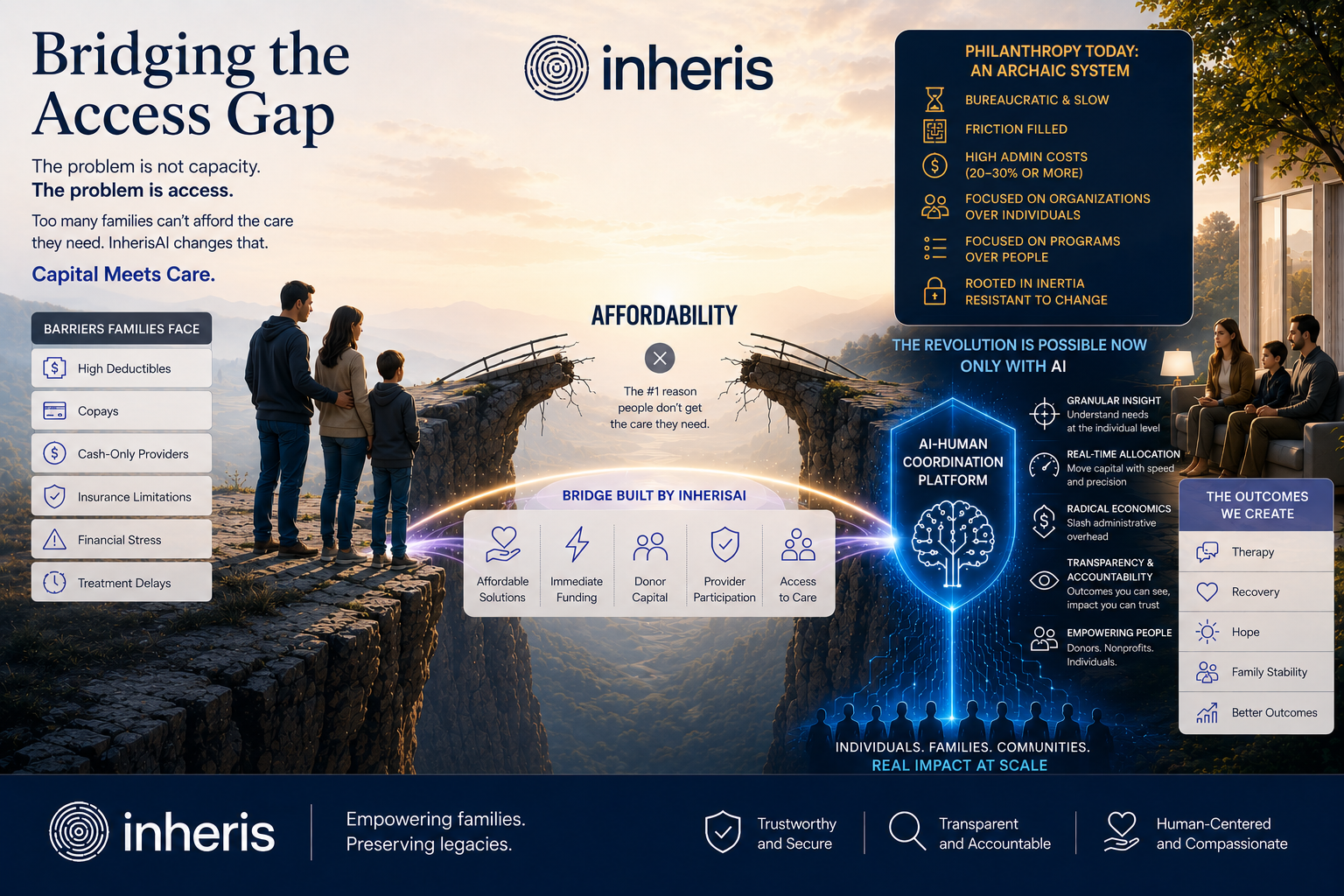
The mental health crisis is often described as a shortage problem: not enough providers, not enough appointments, not enough capacity.
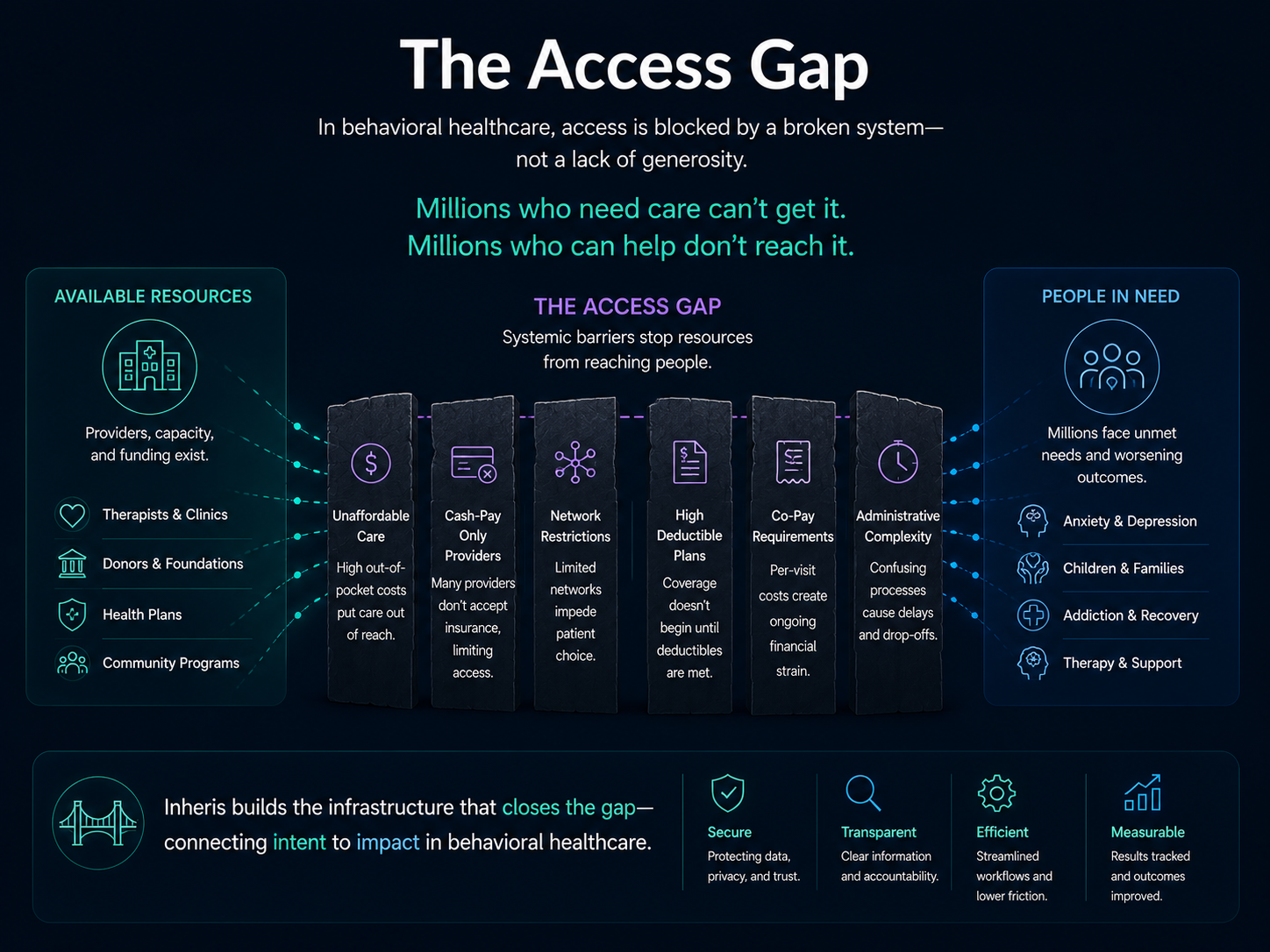
But the closer we looked, the more the crisis revealed something deeper. Millions of people need care. Many excellent providers exist with capacity. Yet care remains financially out of reach.
High deductibles. Limited coverage. Cash-only providers. Out-of-network providers. Families caught between need and payment.
Care can exist and still be inaccessible.
Where can the needed funds come from?
If affordability is central to access, the next question becomes unavoidable: where can the money come from?
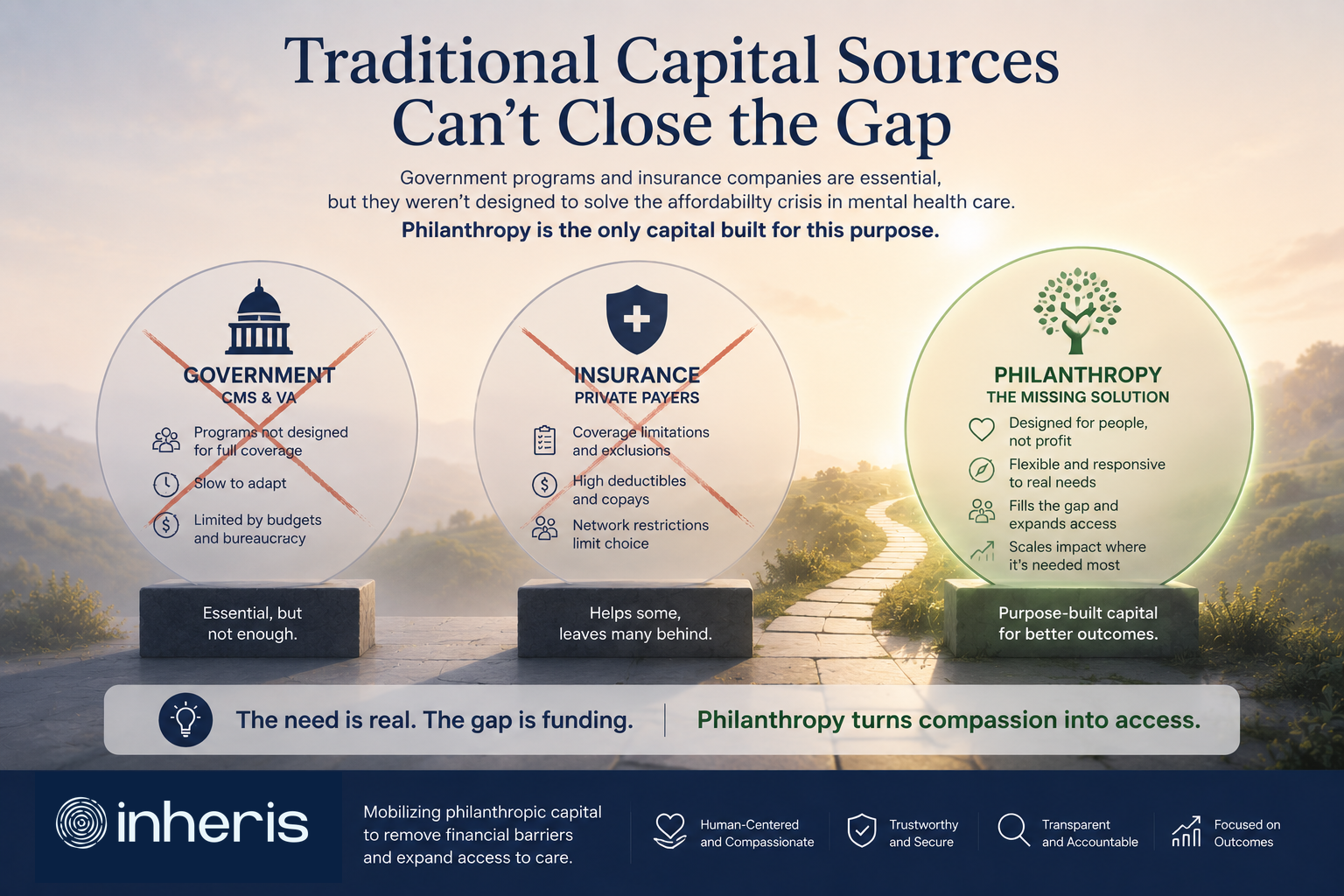
Historically, there have been only two large-scale payment sources for behavioral healthcare: government programs and insurance companies.
These existing payors have failed and will continue to fail.
If government and insurers had not solved the problem, another source of capital had to enter the system.
Not as an afterthought. Not through another slow grant cycle. Not through another layer of administration.
That source was philanthropy.
Then philanthropy revealed a second problem.
Philanthropy is society’s safety net. It exists because human need often falls outside the systems built to serve it.
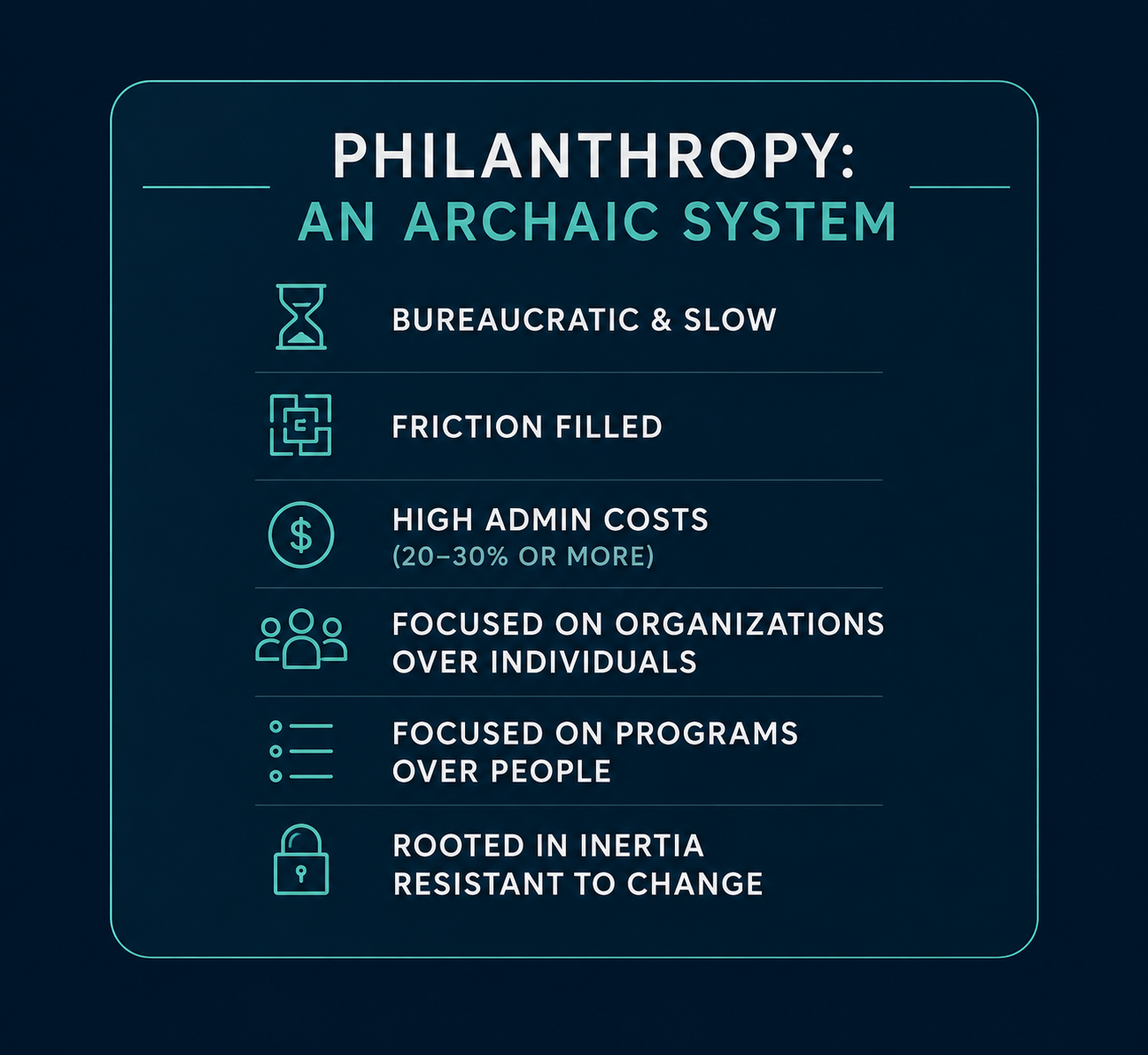
But philanthropy was not built to work effectively addressing problems like the mental health crisis.
Traditional philanthropy is powerful, generous, and essential. Yet it remains largely institution-based. It funds programs, organizations, and initiatives. It does not move capital economically with speed, precision, and accountability to individual needs at scale.
The obstacle was no longer only behavioral healthcare. The obstacle was the infrastructure of philanthropy itself.
Two structural problems. One solution.
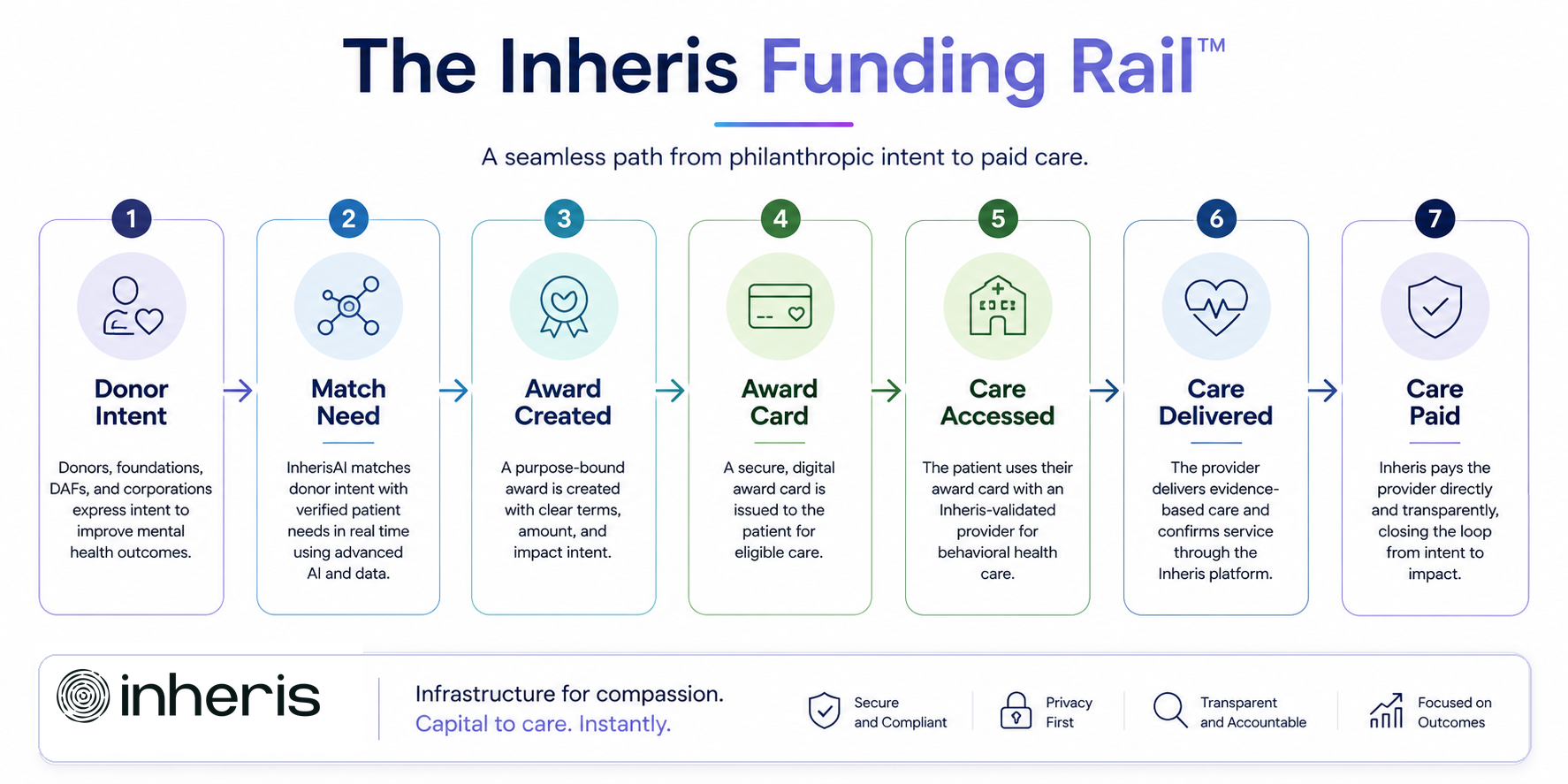
The breakthrough was not simply to create another charitable fund. It was to build the infrastructure that allows philanthropy to work differently: a funding rail, digital award card, AI-driven matching and allocation, and an AI-human organization capable of operating with radically lower administrative cost.
A new funding rail was needed.
In order for philanthropy to meet the need effectively it would require an innovative payment infrastructure.
Donors need a way to express intent. The platform needs to validate need, match capital, allocate awards, and move funds to trusted providers.
Recipients need rapid access to care that meets their needs, protects their privacy, and creates real choice — dignified care free of stigma.
That is why the Inheris model centers on a new philanthropic funding rail — beginning with the digital award card for behavioral healthcare.
Directed giving becomes direct payment for care.
The turning point: AI arrived at exactly the right moment.
Once philanthropy became the missing capital source, the next challenge was scale.
How do you do all of this at the speed of human need?
How do you capture donor intent with granularity? How do you match it to real needs? How do you communicate with donors, providers, and recipients? How do you learn from each interaction? How do you manage the process without building another expensive bureaucracy?
Agentic AI made the answer possible.
Not by plugging a chatbot into philanthropy, but by creating an AI-human operating system for directed giving: matching, allocation, communication, reporting, learning, and continuous coordination.
Inheris was created to power this transformation.
From mental health to philanthropy itself.
Behavioral health showed us the human need. It exposed the access gap. It revealed the limits of existing payment systems. And it pointed directly to philanthropy as the missing source of capital.
But solving that problem required something larger: the reinvention of philanthropic infrastructure.
That is why Inheris exists.
Not as another nonprofit. Not as another fundraising platform. But as the venture-backed technology and operating company building the platform, funding rail, AI systems, and organizational model that make 100% Pure Philanthropy possible.
The Vision
Transforming the Economics of Philanthropy
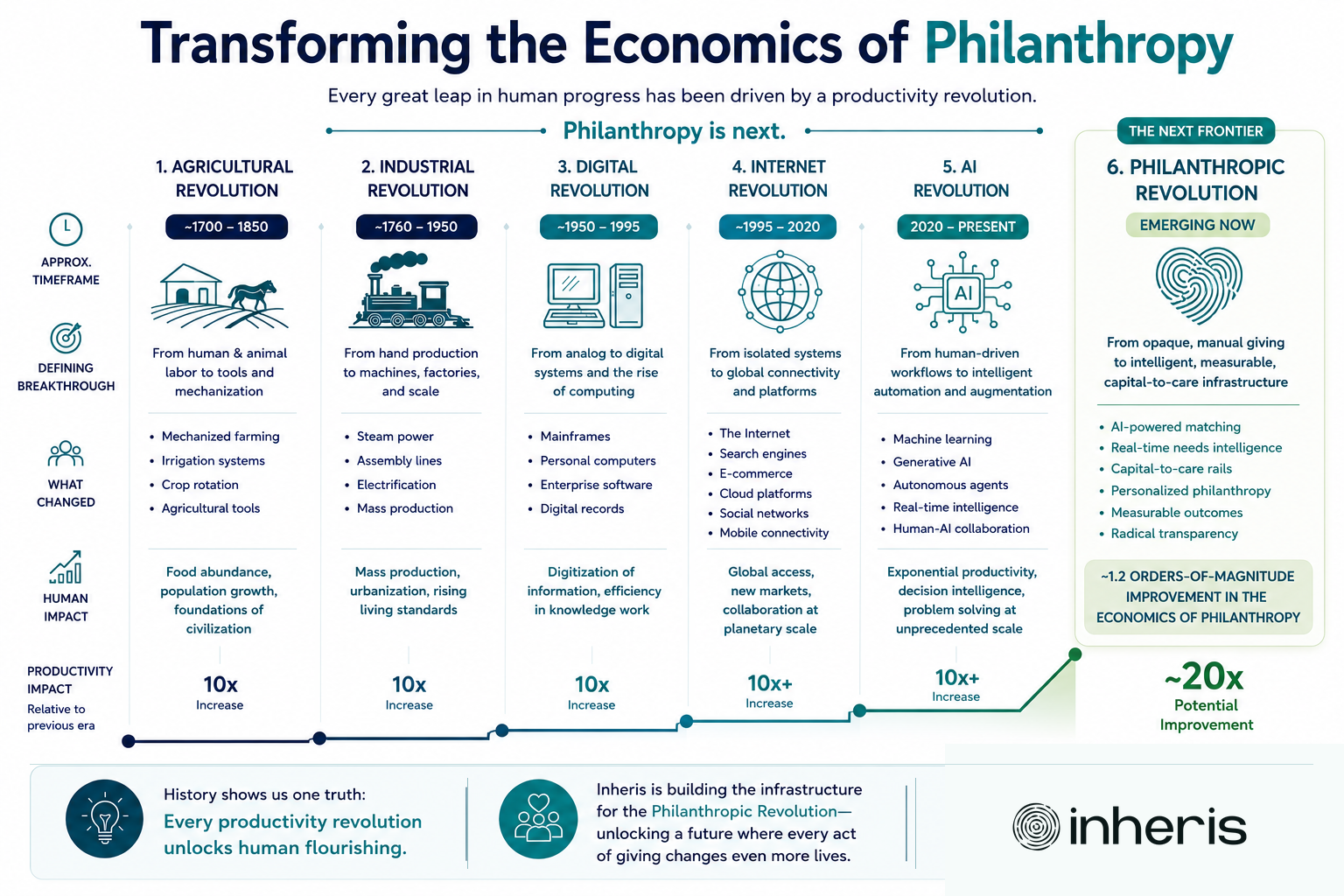
Philanthropy is one of society's most important mechanisms for addressing human need. Yet while nearly every major sector has experienced dramatic productivity gains through technology, philanthropy continues to operate largely through structures designed for a different era.
We believe philanthropy is ready for its own productivity revolution.
Why We Begin with Behavioral Health
We start where the need is greatest and
the opportunity to create impact is clearest.
Behavioral health is where the challenge is impossible to ignore. The need is enormous. The consequences are profound. The barriers to access are often financial. And the human cost is measured in lives, families, and communities.
It is also where the limitations of traditional philanthropy become unmistakable. Behavioral health exposes, with exceptional clarity, the gap between available resources and unmet need. If philanthropy can become more effective here, it can become more effective almost everywhere.
But behavioral health is only the beginning. The AI-human infrastructure we are building is designed to scale across many other human and societal needs. Once philanthropy becomes intelligent, precise, and economically scalable, the same platform can transform how people help people—building stronger communities, deeper human connections, and new bridges of opportunity across society.
Philanthropy's Untapped Potential
Philanthropy exists because gaps exist
Government plays an essential role. Insurance plays an essential role. Institutions play an essential role. Yet millions of needs remain unmet.
Philanthropy serves as society's voluntary safety net — the mechanism through which individuals, families, foundations, and communities direct resources toward needs that would otherwise go unanswered.
The generosity exists. The opportunity is to make philanthropy dramatically more effective.
Returning Power to People
The future of philanthropy is people-centered.
Intelligent Networks
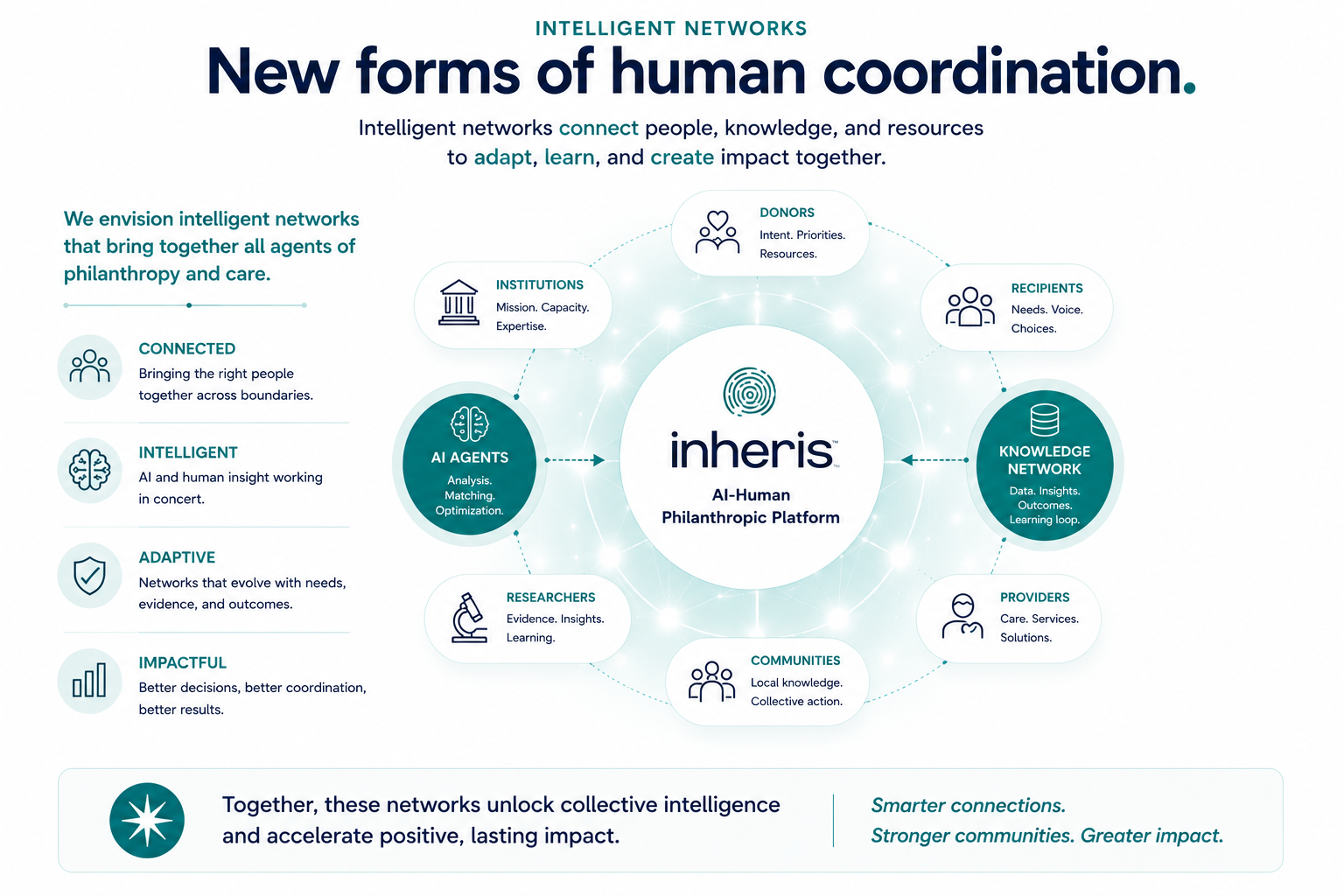
New forms of human coordination
The twentieth century was organized around institutions. The twenty-first century is increasingly organized around networks. Social networks transformed communication. Digital networks transformed commerce. Artificial intelligence now enables entirely new forms of human coordination.
We envision intelligent networks connecting donors, providers, recipients, researchers, institutions, and AI agents within continuously evolving social environments. These networks learn, adapt, and improve over time.
The Next Productivity Revolution
Most advances improve one sector. A breakthrough in philanthropy can improve many.
Agriculture transformed food production. Industry transformed manufacturing. Information technology transformed knowledge work. Artificial intelligence will transform nearly every sector of society.
We believe philanthropy may be one of the most profound opportunities of all because every societal challenge ultimately depends upon moving resources toward human need.
The future of philanthropy will be more intelligent, more responsive, more transparent, more effective, and more deeply connected to the people it was created to serve.
Platform
The infrastructure behind the revolution.
The mental health crisis revealed a profound truth: the challenge was not simply finding more providers.
The challenge was moving capital to human need — quickly, accurately, and at scale.
That required infrastructure that did not exist. Just as the internet required communication networks, and electronic commerce required payment networks, donor-intent philanthropy requires an entirely new form of infrastructure.
InherisAI was created to build that infrastructure.
Three Breakthroughs
One platform. Three fundamental innovations.
A New Funding Rail
Connect donor intent directly to verified need, provider payment, and measurable impact.
Intelligent Social Environments
Continuously learning ecosystems that strengthen relationships, trust, communication, and outcomes.
The AI-Human Organization
A new operating model that dramatically improves scalability, responsiveness, and economics.
Breakthrough One
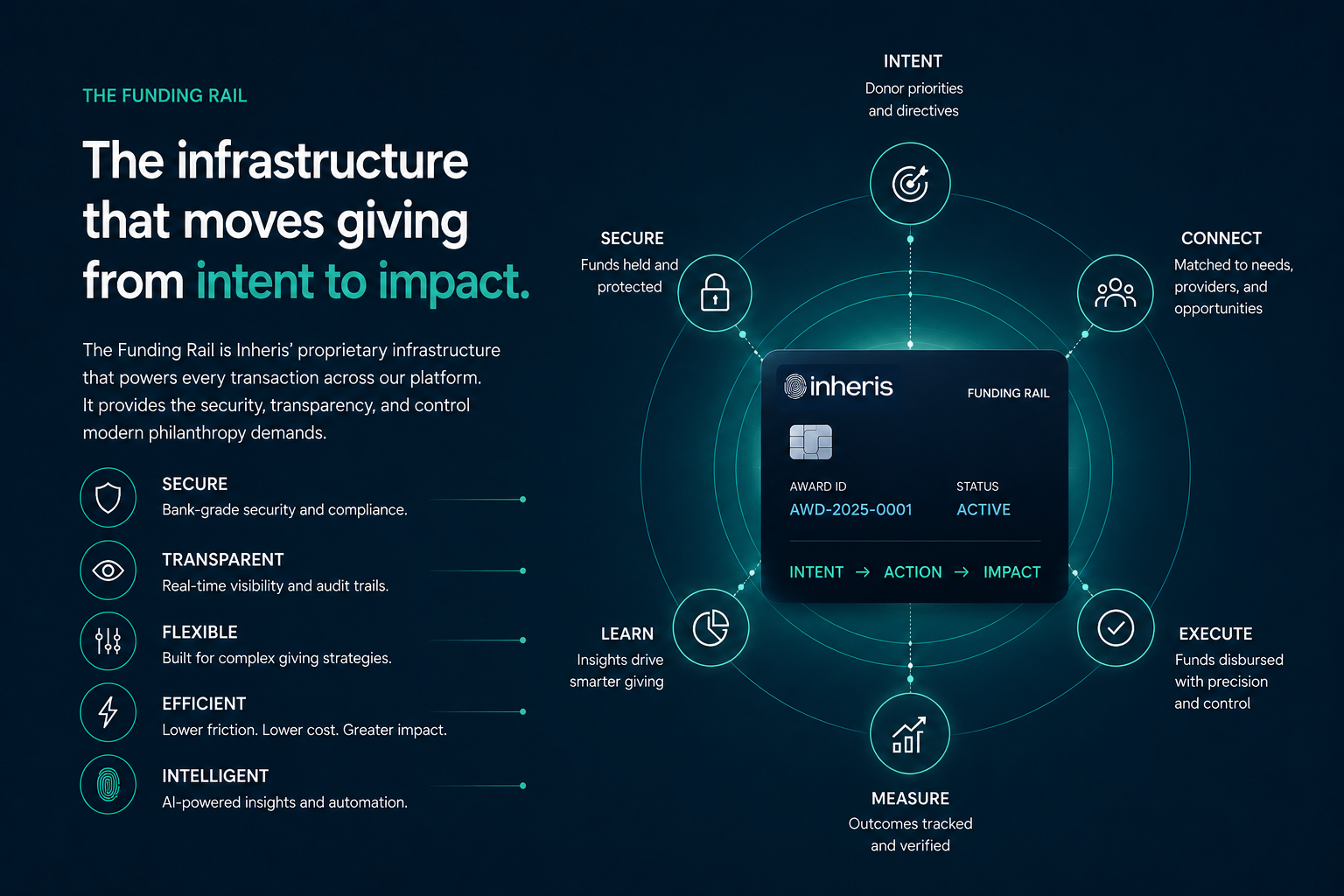
A new funding rail
The first breakthrough was financial.
Traditional philanthropy was designed around institutions. Donors give to organizations. Organizations decide how resources are allocated. Recipients rarely receive support directly. Administrative layers consume time, money, and information.
Behavioral healthcare exposed the limitations of this model.
Patients need access to care now. Providers need reliable payment. Donors want confidence that their resources are reaching the people and causes they intended to support.
A new funding rail was needed — one capable of connecting donor intent, verified need, provider payment, and measurable impact.
Intelligent Capital Allocation
The first payment infrastructure designed specifically for donor-intent philanthropy.
Breakthrough Two
Intelligent social environments
Moving money solves only part of the problem.
People also need information. Guidance. Relationships. Trust. Community.
Historically these functions have been fragmented across providers, support organizations, foundations, researchers, and institutions.
Artificial intelligence makes something entirely new possible.
InherisAI creates intelligent social environments built around specific philanthropic sectors — beginning with behavioral health.
Every interaction strengthens the network.
Every outcome improves future outcomes.
The environment itself becomes smarter over time.
Breakthrough Three
The AI-Human organization
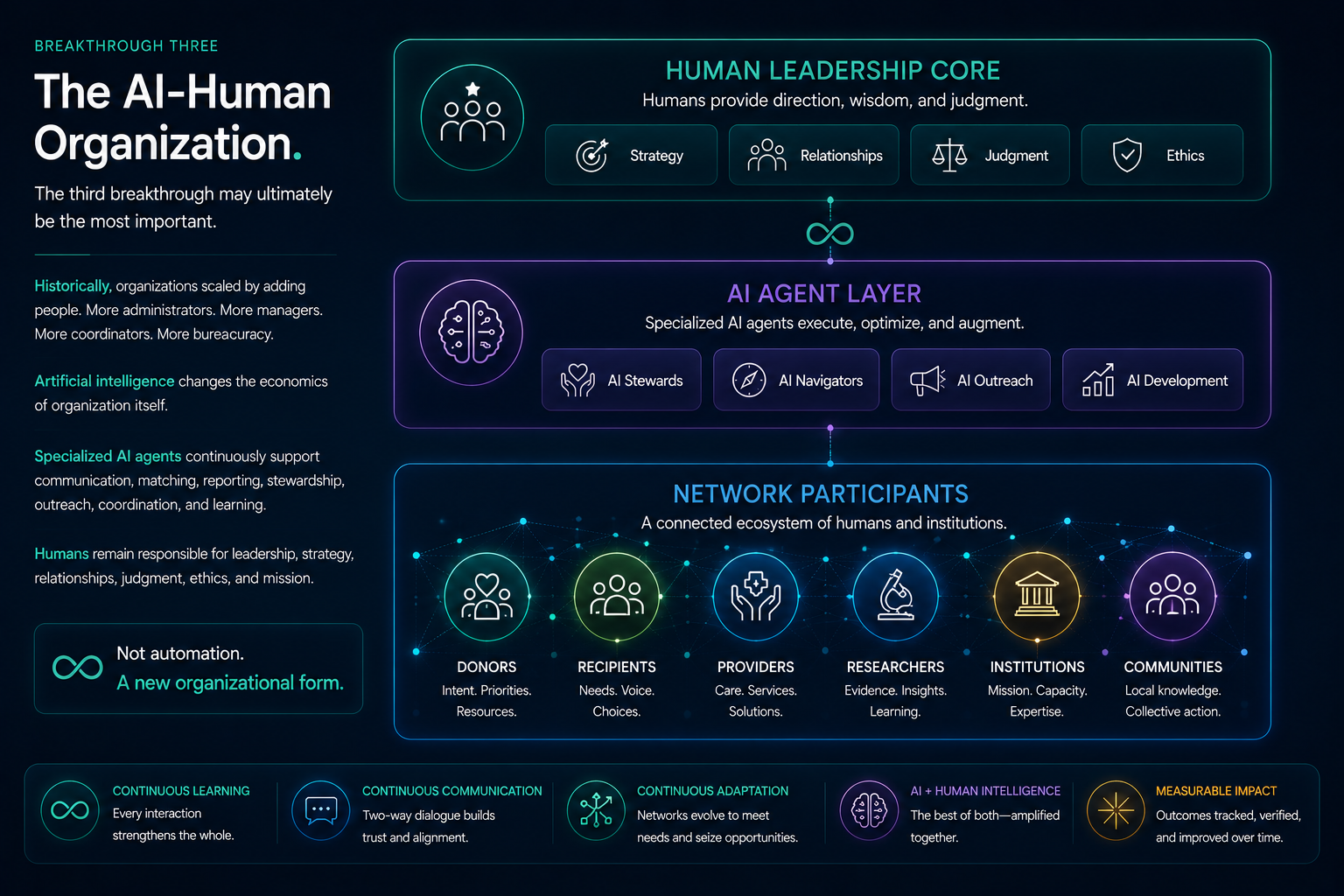
The third breakthrough may ultimately be the most important.
Historically organizations scaled by adding people. More administrators. More managers. More coordinators. More bureaucracy.
Artificial intelligence changes the economics of organization itself.
Specialized AI agents continuously support communication, matching, reporting, stewardship, outreach, coordination, and learning.
Humans remain responsible for leadership, strategy, relationships, judgment, ethics, and mission.
Human Leadership Core
∞
AI Agent Layer
Not automation.
A new organizational form.
Platform Summary
Intelligent philanthropic infrastructure
Each breakthrough becomes more powerful because of the others.
The funding rail moves capital.
The social environment creates knowledge and relationships.
The AI-human organization transforms economics and scalability.
Together they create something entirely new:
Funding Rail + Intelligent Networks + AI-Human Organizations
The Infrastructure Behind 100% Pure Philanthropy™
Sectors
Starting with behavioral health.
Built to scale beyond.
InherisAI begins in behavioral health because the need is urgent, the access gap is clear, and the relationship between affordability and care is impossible to ignore.
But the platform is not limited to behavioral health. It is designed for any sector where donor intent can be matched to a specific, verifiable human need and paid through trusted providers, institutions, or vendors.
Why Behavioral Health First
The crisis makes the infrastructure problem visible.
Behavioral health is often described as a capacity problem. It is also an affordability and access problem.
People need care. Providers can deliver care. Donors want to help. But the infrastructure to connect donor intent, verified need, funding, provider payment, and outcomes has not existed at scale.
That makes behavioral health the first proving ground for the InherisAI model.
An Extensible Platform
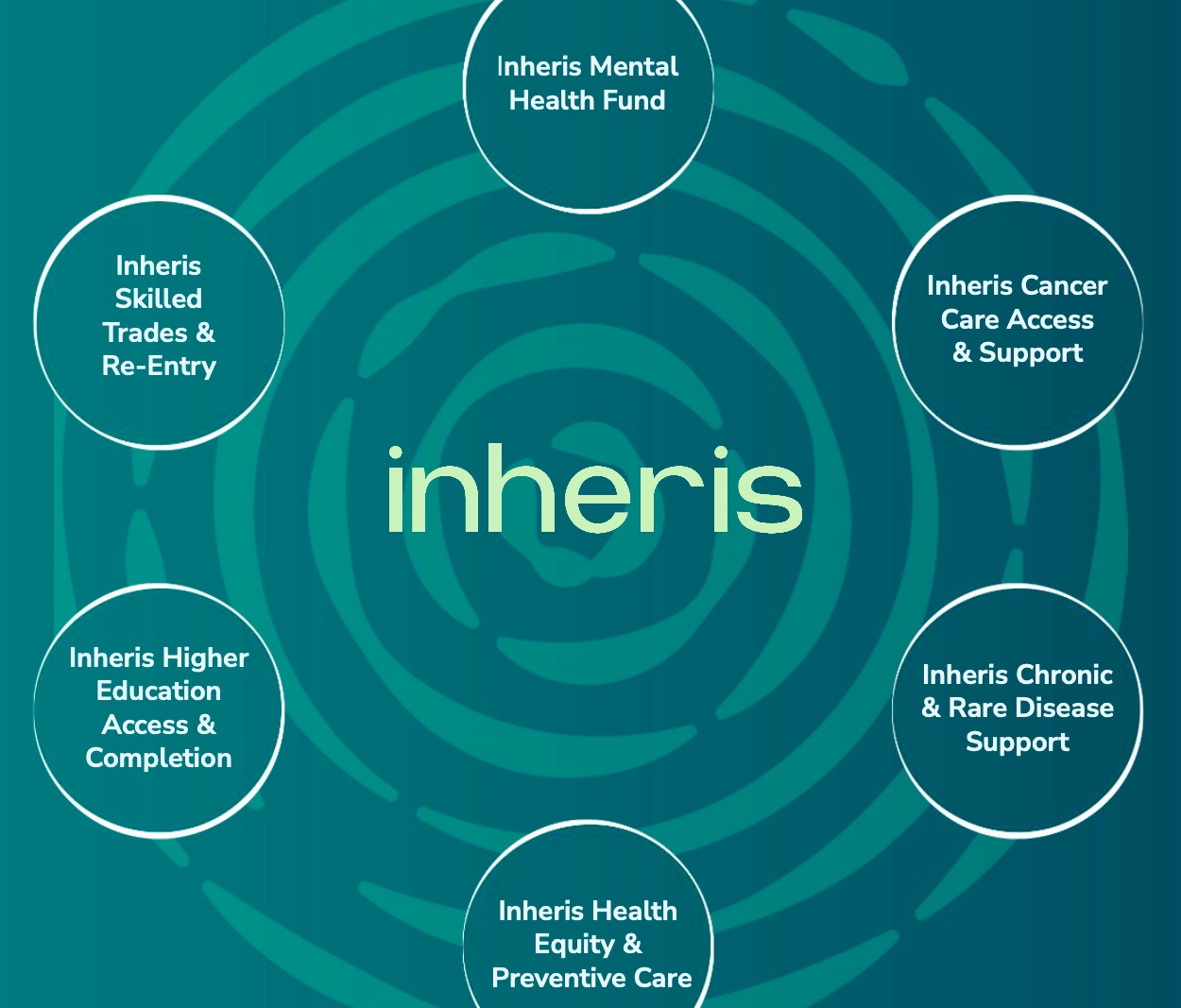
One infrastructure layer. Many sectors of need.
Needs exist across many areas of care, education, opportunity, and stability: a person has a specific need, a donor wants to help, and a trusted provider or institution can deliver the service if funding reaches the right place quickly.
The Sectors Thesis
Behavioral health is the beginning. The opportunity is to create precise, efficient and pure philanthropy itself.
InherisAI is building infrastructure for sectors where capital can be matched intelligently to human need and paid through trusted delivery channels.
One platform. Many sectors. Directed giving wherever it can change lives.
Economics
Every Revolution Changes Economics
Mechanization transformed agriculture. Industrialization transformed manufacturing. Digital technology transformed information. Artificial intelligence is now transforming how organizations operate.
Why should philanthropy be any different?
The Cost of Good Intentions
The issue is not that administration exists. The issue is that the economics have not changed.
Every philanthropic organization exists to serve a mission. Yet every philanthropic organization must also sustain itself — administration, management, fundraising, compliance, reporting, technology, and operations.
These functions are necessary. But they also consume resources that donors intended to direct toward impact. The opportunity is to redesign the operating model itself.
A New Economic Model
An entirely different economic model.
Today’s philanthropic and healthcare support systems were built for a world where every donor interaction, patient intake, provider relationship, compliance review, and reporting function required human labor.
Those economics became embedded in the system and, over time, created layers of administration, coordination, and overhead that are difficult to change.
Inheris was designed from the ground up as an AI-native platform — not as a traditional nonprofit enhanced with software, but as an entirely new operating model.
By automating donor engagement, patient intake, provider coordination, matching, communications, compliance workflows, reporting, and ongoing relationship management through AI agents, we believe administrative costs can ultimately be reduced by approximately 1.2 orders of magnitude.
That equates to roughly 16× greater administrative efficiency.
The implications extend far beyond cost savings. When administration becomes dramatically less expensive, more dollars reach patients, providers can serve more people, donors can fund more outcomes, and entirely new forms of philanthropy become economically feasible.
This is not merely an efficiency improvement. It is a fundamental restructuring of how charitable capital flows through society.
For the first time, philanthropy can operate with the speed, transparency, personalization, and economics of a modern technology platform.
Why It Matters
Better vs. Revolutionary
1.2 orders of magnitude
At that scale, the economics change. You are no longer improving the existing system. You are creating a new one.
Revolutions are measured in multiples — not percentages.
The Emergence of AI-Human Organizations
Scale through intelligence, not bureaucracy
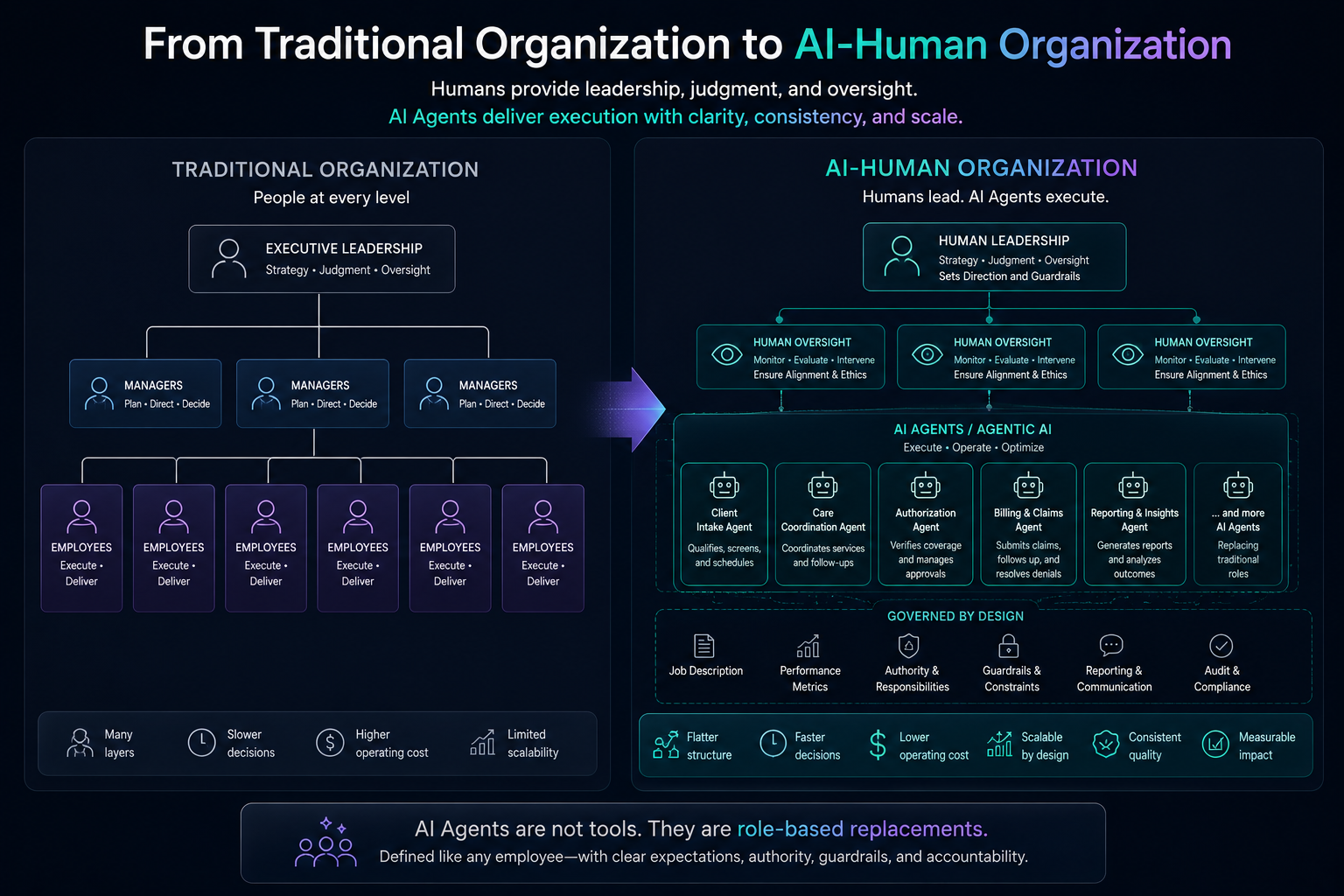
Historically, organizations scaled by adding people — additional managers, administrators, coordinators, and support functions. Artificial intelligence creates the possibility of a different model.
In an AI-human organization, people remain responsible for leadership, judgment, relationships, ethics, and strategy while intelligent agents support communication, coordination, analysis, monitoring, and operational execution.
This is not simply a more efficient organization. It is a new organizational form.
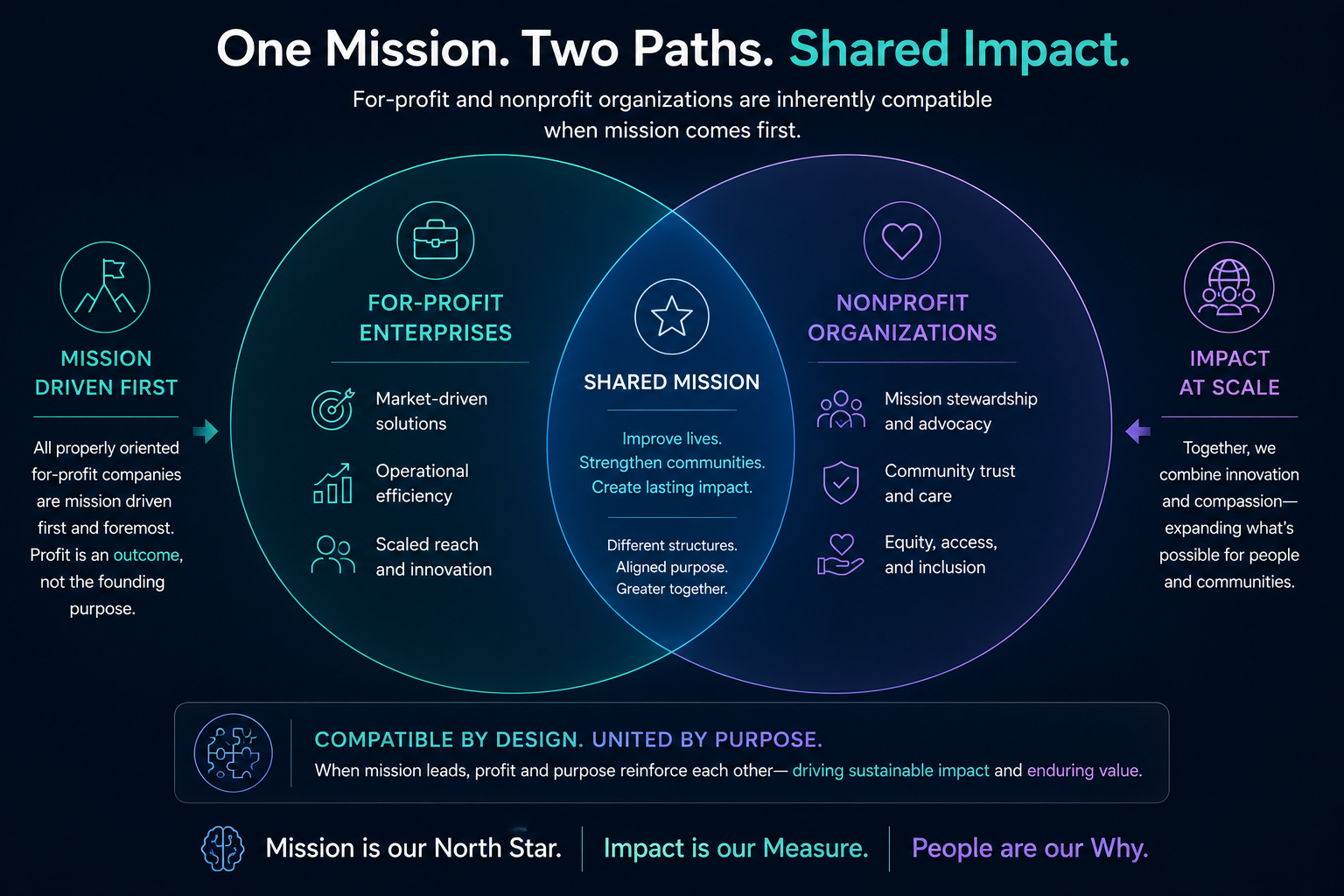
Mission and Economics
Mission is fundamental. Profit is evidence.
Many people assume that nonprofit organizations are mission-driven while for-profit organizations are profit-driven. We believe this misunderstands how successful organizations actually work.
Every enduring organization is mission-driven. A hospital exists to improve health. A university exists to advance knowledge. A technology company exists to solve problems for customers. A nonprofit exists to address a social need.
Organizations succeed when they fulfill their mission effectively. Value is created when people benefit. Profit is not the mission.
Profit is evidence that value is being created.
The Inheris Structure
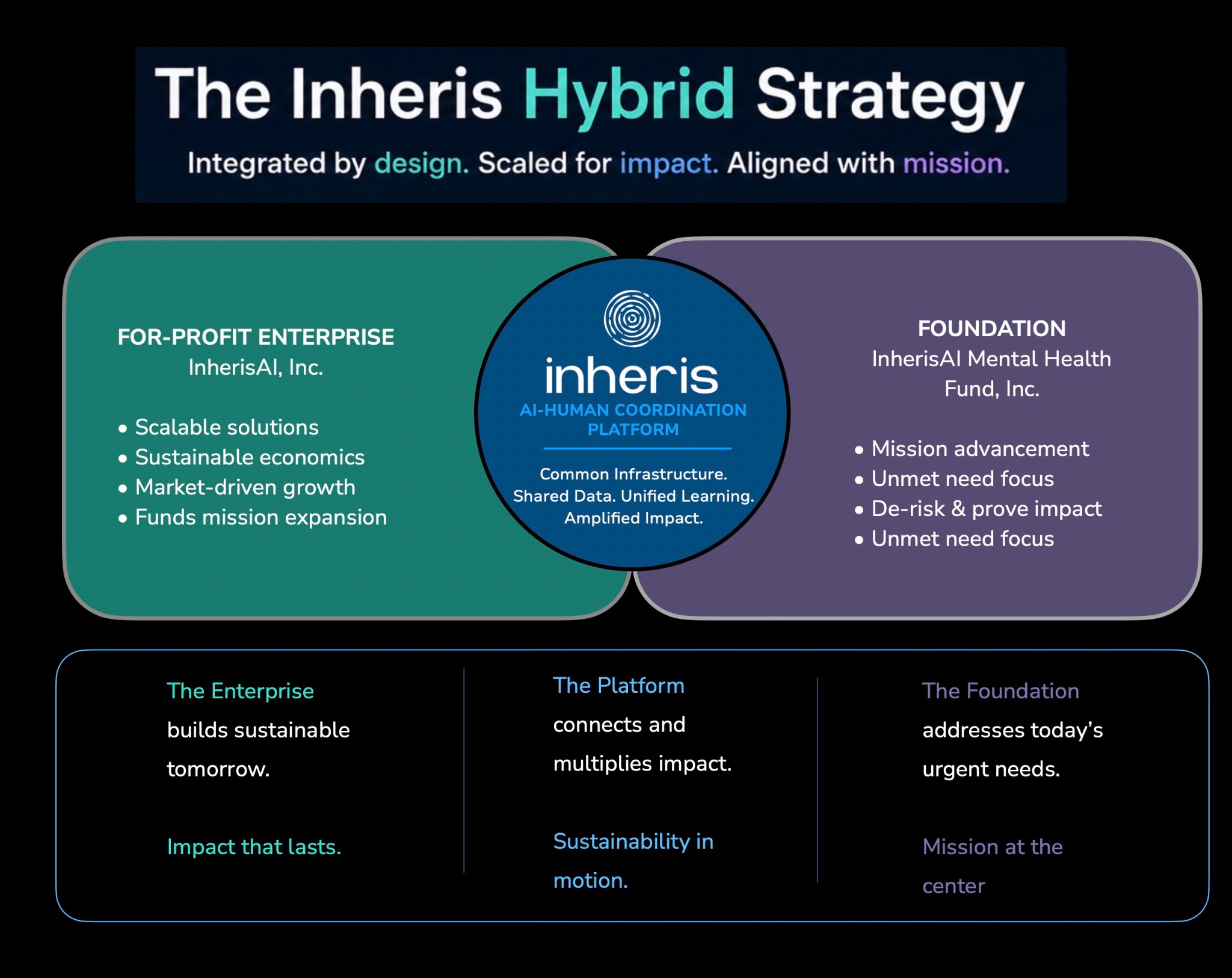
Separate entities. Aligned incentives.
The Inheris Mental Health Fund exists to maximize impact. InherisAI exists to build and operate the infrastructure that makes that impact possible.
The Fund deploys charitable capital. InherisAI develops technology, intelligent networks, AI systems, funding rails, and organizational capabilities.
The better the infrastructure becomes, the more effective philanthropy becomes. The more effective philanthropy becomes, the greater the societal impact.
Aligning Incentives
The goal is not to eliminate the economics of philanthropy. The goal is to align them.
Traditional philanthropy often separates mission from innovation. The Inheris model aligns them.
The Fund
Focuses on outcomes and charitable impact.
The Platform
Focuses on efficiency, infrastructure, and intelligence.
The Economics
Reward innovation that improves mission delivery.
Mission creates value. Value creates sustainability. Sustainability creates impact.
Company
The enterprise behind the platform.
InherisAI, Inc. is the venture-backed technology and operating company building the infrastructure that makes 100% Pure Philanthropy™ possible.
The Fund raises philanthropic capital. InherisAI builds and manages the platform, funding rail, AI systems, and operating model that allow donor intent to move toward verified human need with speed, precision, and radically improved economics.
The Structure
Separate entities. Aligned purpose.
The Inheris Mental Health Fund is a separate 501(c)(3) public charity focused on philanthropic impact.
InherisAI is the for-profit technology and operating company that provides the organization, platform, development, data systems, communications, administration, and management services required to make the model scalable.
This structure allows the Fund to focus on charitable deployment while InherisAI focuses on building the infrastructure that improves the economics of philanthropy.
Fund + OpCo
The Fund: raises and deploys philanthropic capital for care.
InherisAI: builds and manages the platform, funding rail, AI systems, and operating organization.
100% Pure Philanthropy™
made possible by InherisAI.
Senior Leadership
Experienced builders across finance, healthcare, technology, and philanthropy.

Founder, Chairman & CEO
Ronald D. Van Horssen
Broad spectrum strategic, organizational, technology and financial visionary. Proven leadership performance as chairman, CEO, executive board member and award-winning entrepreneur in both established ($100M+) and earlier stage companies in B2B and B2C sectors. Track record of building market leading companies, commercializing new technologies, negotiating and managing acquisitions and divestitures, diagnosing marketing, business development/sales, operating, and financial problems and effecting organizational change.
Built and managed organizations from small start-up teams to international companies. As founder, CEO and president, played an important role in the early commercialization of MRI and built the largest diagnostic imaging and therapeutic services company in the world in the mid-1980s through 1992 — generating 40x returns to first round investors.
Advisor to universities and national laboratories, including NASA, Los Alamos and INL, on the commercialization of new technology in healthcare, aerospace, advanced technology and manufacturing. Extensive venture financing experience as investor, partner in a Bay Area medtech VC fund and chairman/CEO. M.S. Industrial Administration, Carnegie Mellon University; B.S. (honors) Chemical Engineering, South Dakota Mines. Selected as an Entrepreneur of the Year by Inc. magazine and Arthur Young.

President, Behavioral Health
Miles D. Kramer, LCSW
Miles is a transformational behavioral health executive with 25+ years of experience driving strategic growth, operational excellence, and technology innovation across complex healthcare environments. He previously led growth and operations at Aligned Telehealth, acquired by Amwell, and held leadership, growth, and operational roles at Horizon Health/Universal Health Services and Acadia Healthcare.
He has maintained clinical licensure for more than 25 years and holds Licensed Clinical Social Worker licenses in both California and Colorado, providing a rare combination of executive leadership, clinical mentorship and frontline clinical expertise. His experience spans community behavioral health, safety-net hospitals, psychiatric emergency services, inpatient acute services, telehealth, FQHCs, correctional health, management consulting, joint ventures, M&A, freestanding psychiatric hospitals and ambulatory settings. M.S.W., California State University, Fresno; B.A., University of California, Santa Barbara.

Chief Philanthropy Officer
Alyssa Crockett
Senior healthcare philanthropy executive and growth leader with 25+ years building philanthropic enterprises, leading organizational transformation, and mobilizing capital at scale. Led campaigns generating $208M+ and personally secured $61M+ in philanthropic gifts, including multiple seven-figure investments and public-private partnerships.
Executive leadership experience spans oncology, behavioral health, palliative care, education and safety-net systems, including roles with Banner MD Anderson Cancer Center, Valleywise Health and Ryan House, a national leader in pediatric palliative care. Directed and grew The Xavier Foundation, overseeing endowment strategy, governance and philanthropic growth while expanding named funds by 50% and doubling annual revenue. B.A., English Literature, University of Arizona.
Senior Technology Leadership
AE Studio
AI that performs in the real world — and can be trusted with what matters most.
AE Studio is an applied AI studio of 150 senior engineers, scientists, and product builders based in Los Angeles and independent since 2016.
The company was founded on a single mission — increasing human agency through technology — and that mission shapes what it chooses to build. AE Studio takes AI systems from concept to production for organizations that need them to work in the real world, handling the full build across system architecture, UX, conversational agent design, custom machine learning, and the evaluations and guardrails that keep AI trustworthy as it scales.
The strategists who map the opportunity are the same engineers who ship it, for clients ranging from Inheris to Walmart, Samsung, and Berkshire Hathaway.
AE Studio is also among the few firms doing frontier AI safety research and commercial delivery under one roof. Its alignment research runs with collaborators including DARPA and Anthropic, and its published safety work is used by OpenAI. Those findings flow directly into the guardrails and governance of everything AE Studio ships.
BUILD
Senior engineering, science, and product teams capable of moving from concept to platform with speed and discipline.
TRUST
Independent, experienced builders with the technical depth required for sensitive AI, healthcare, and philanthropic infrastructure.
ALIGNMENT
A product and engineering partner aligned with InherisAI’s mission to build a new category of intelligent philanthropic infrastructure.
Functional design and specifications are led by the InherisAI team experts in behavioral health, philanthropic giving, system development and healthcare finance. The functional system design has evolved in conjunction with advisors in legal structure, nonprofit fund management, behavioral health, and healthcare IT.
Connect With InherisAI
Press releases, media coverage, company announcements, and thought leadership.
White papers, platform insights, sector research, and future publications.